
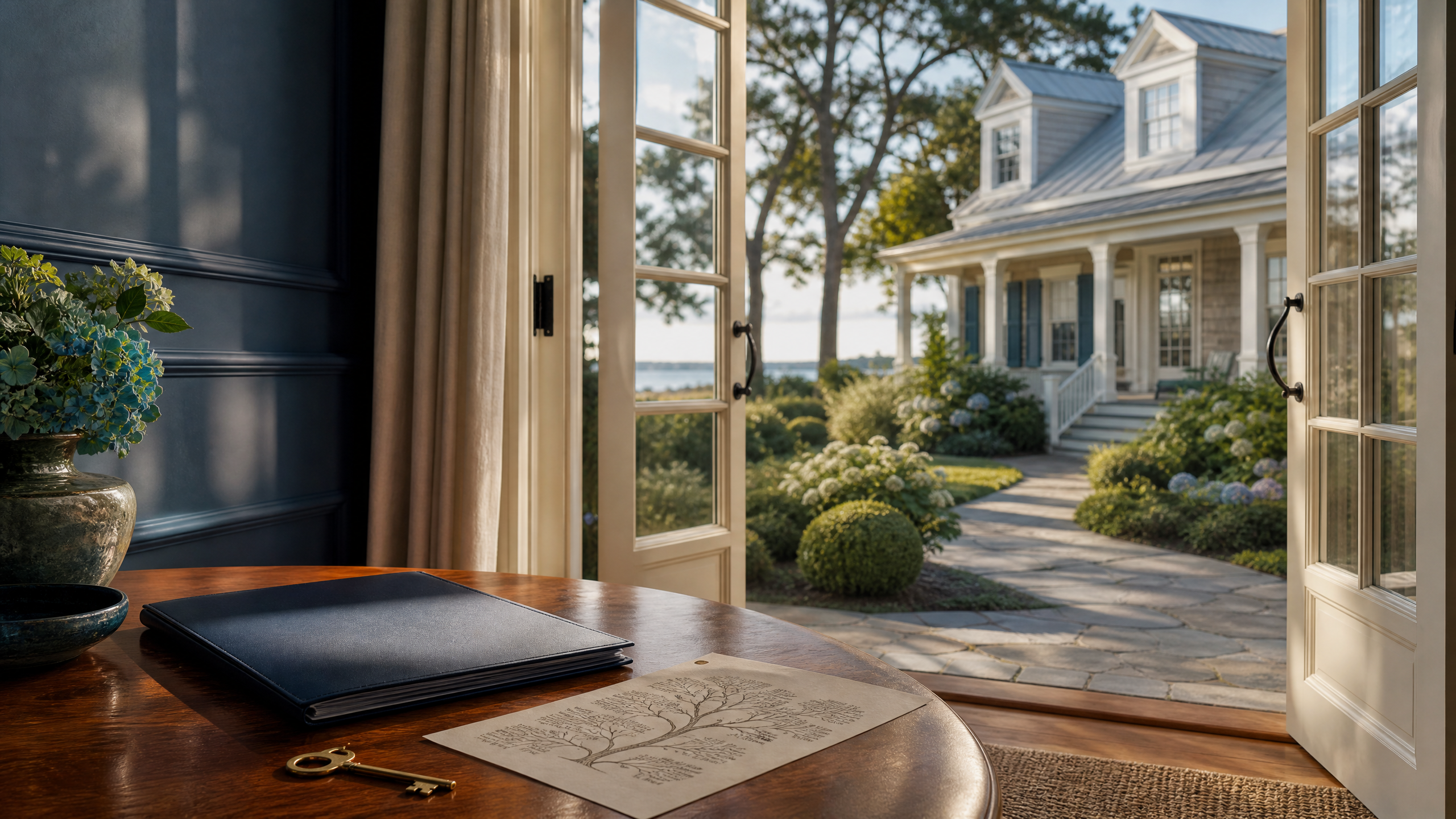
Many people assume that if something happens to them, their home will simply go to whoever seems like the obvious choice, a spouse, a sibling, or a close friend who has been there for them for years. But North Carolina law does not work off assumptions. If you die without a will, the state has already written one for you, and it may not distribute your house the way you would have wanted.
This is especially true if you do not have children. Without a will and without descendants, the path your property takes can involve family members you rarely speak to, or in rare cases, the state itself. Understanding how this process works, and how easily it can go sideways, is the first step toward making sure your home ends up exactly where you intend, through proper estate planning.
What Happens To My House If I Die Without a Will in North Carolina?
When someone dies without a valid will, North Carolina calls this dying “intestate.” Instead of your wishes controlling what happens to your home and other assets, the North Carolina Intestate Succession Act, found in Chapter 29 of the General Statutes, takes over. This law creates a strict order of who inherits, based entirely on legal family relationships rather than closeness, dependency, or what you may have told loved ones you wanted.
Your house does not pass outside of this process just because you lived in it for decades or because a particular relative helped care for you. It becomes part of your intestate estate, and the statute, not you, decides who receives it. The way that process plays out depends on a number of factors specific to your situation, which is exactly why so many families end up needing guidance from an attorney once a death occurs without a plan already in place.
Does Marital Status Change Who Inherits My House?
Yes, and this is often where the biggest surprises happen. If you are married when you die without children, your surviving spouse does not automatically inherit everything. Whether your spouse receives the full estate or has to share it with your surviving parents depends on details that are easy to get wrong, and the calculation is not as simple as splitting things down the middle.
This means a surviving spouse could end up owning a home jointly, in a sense, with a mother-in-law or father-in-law they never expected to share property decisions with. For many blended families or second marriages, this outcome can create real tension at an already difficult time, and untangling exactly what each person is legally entitled to is not something most families can safely work out on their own.
Who Inherits My Property If I Have No Children and No Spouse?
If you are unmarried and have no children when you die, North Carolina law does not simply hand your home to whoever feels closest to you. It moves through a defined chain of relatives, starting with your parents and extending outward through more distant family if no parent survives you. Exactly how far that chain reaches, and how any given branch of your family would share in the outcome, depends heavily on who in your family is still living and how those relationships are legally documented.
This is one of the areas where families are most often caught off guard. Two people with what looks like a similar family tree can end up with very different outcomes, because small facts, like whether a parent is still living, whether a sibling predeceased you, or whether a family member was ever legally adopted, can shift the entire result. These are not details most people can confidently sort out on their own, which is why an attorney’s involvement matters well before any of this becomes a live question for your family.
Could a Relative I’ve Never Met Inherit My House?
It is entirely possible. North Carolina intestacy law does not weigh how close you were to a relative or how long it had been since you last spoke. A sibling you were estranged from for decades, or a relative you have never met, can still inherit under this framework depending on who else in your family is living at the time of your death. Estrangement, on its own, does not remove someone from consideration.
Identifying exactly who qualifies, and confirming legal relationships like adoption or parentage, can also become its own complicated and time-consuming process for whoever is left to administer your estate. This is one of the clearest reasons intestate succession rarely reflects what someone would have actually chosen, if they had left a valid will.
Could My House Really Go To the State of North Carolina?
In theory, yes, though it is rare. If a thorough search turns up no legally recognized relatives at all, your property “escheats,” meaning it transfers to the State of North Carolina. Because the law casts such a wide net across extended family, this outcome is uncommon. But it illustrates just how far the state will go to find an heir before your house sits with no legal owner, and how much simpler it is to name your own beneficiaries than to leave the outcome to a search process none of your loved ones asked for.
Why Does This Create Problems for My Family?
Even when the statute does identify an heir, intestate succession often creates complications a will could have avoided. Property may need to be divided among multiple relatives who now co-own a home they have very different feelings about keeping, selling, or living in. Relatives may need to be located and formally notified before anything can move forward, a process with its own timing rules and requirements that can delay administration for months. Unmarried partners, stepchildren who were never legally adopted, and close friends receive nothing at all, regardless of how central they were to your life, and there is no exception process for these situations once you are gone.
These outcomes are rarely what someone would have chosen for themselves. They are simply what happens by default, and by the time your family is sorting through them, it is too late to change the result. The only way to control who inherits your home is to have a plan in place before that becomes a question anyone has to answer.
How Can David E. Anderson, PLLC Help Protect My Home and My Family?
At David E. Anderson, PLLC, we believe every goal, whether big or small, starts with a plan, and few things matter more than making sure your home goes to the people you actually intend. A properly drafted will or trust allows you to name your beneficiaries directly, avoid unnecessary complications for your loved ones, and often minimize the time and expense of the probate process altogether.
Every family’s situation is different, and the rules touched on here only scratch the surface of how North Carolina law would apply to your specific circumstances. The details that determine your outcome, who counts as a legal heir, how shares are calculated, and what documentation is required, are not things to guess at or piece together on your own. If you do not currently have an estate plan, or if it has been years since you reviewed one, now is the time to make sure your wishes, not a statute, decide what happens to your home. Contact our office to schedule a consultation, and let’s build a plan that reflects what matters most to you and your family.